One Cracked Tile Can Cost You Thousands — Here’s What Florida Homeowners Need to Know
Broken roof tile replacement is one of the most urgent repairs a Florida homeowner can face — and one of the most underestimated.
Quick answer: What should you do about a broken roof tile?
- Assess the damage from the ground using binoculars — look for cracked, shifted, or missing tiles
- Protect the area immediately with aluminum flashing if a replacement tile isn’t ready
- Source a matching tile by manufacturer, profile, and color before removing anything
- Inspect the underlayment beneath the broken tile before installing a replacement
- Replace and secure the tile using code-approved adhesive or fasteners
- Call a licensed roofer if the pitch is steep, the underlayment is damaged, or more than a few tiles are affected
A single cracked or missing tile might look minor from the street. But here in Florida, where afternoon storms roll in fast and humidity never really lets up, that small gap in your roof’s armor can let water reach the underlayment, the decking, and eventually your ceiling — sometimes within hours.
According to roofing industry data, 30–40% of residential roof leaks trace directly back to broken or missing tiles. Clay tiles can last over 60 years and concrete tiles 40–60 years, but neither does its job with even one piece missing.
I’m Byron Toups, founder of RoofPro Roofing, and I’ve spent over a decade handling everything from single broken roof tile replacement jobs to full storm-restoration projects across the Florida Panhandle and beyond. In this guide, I’ll walk you through exactly what to do — and when to call in a pro.
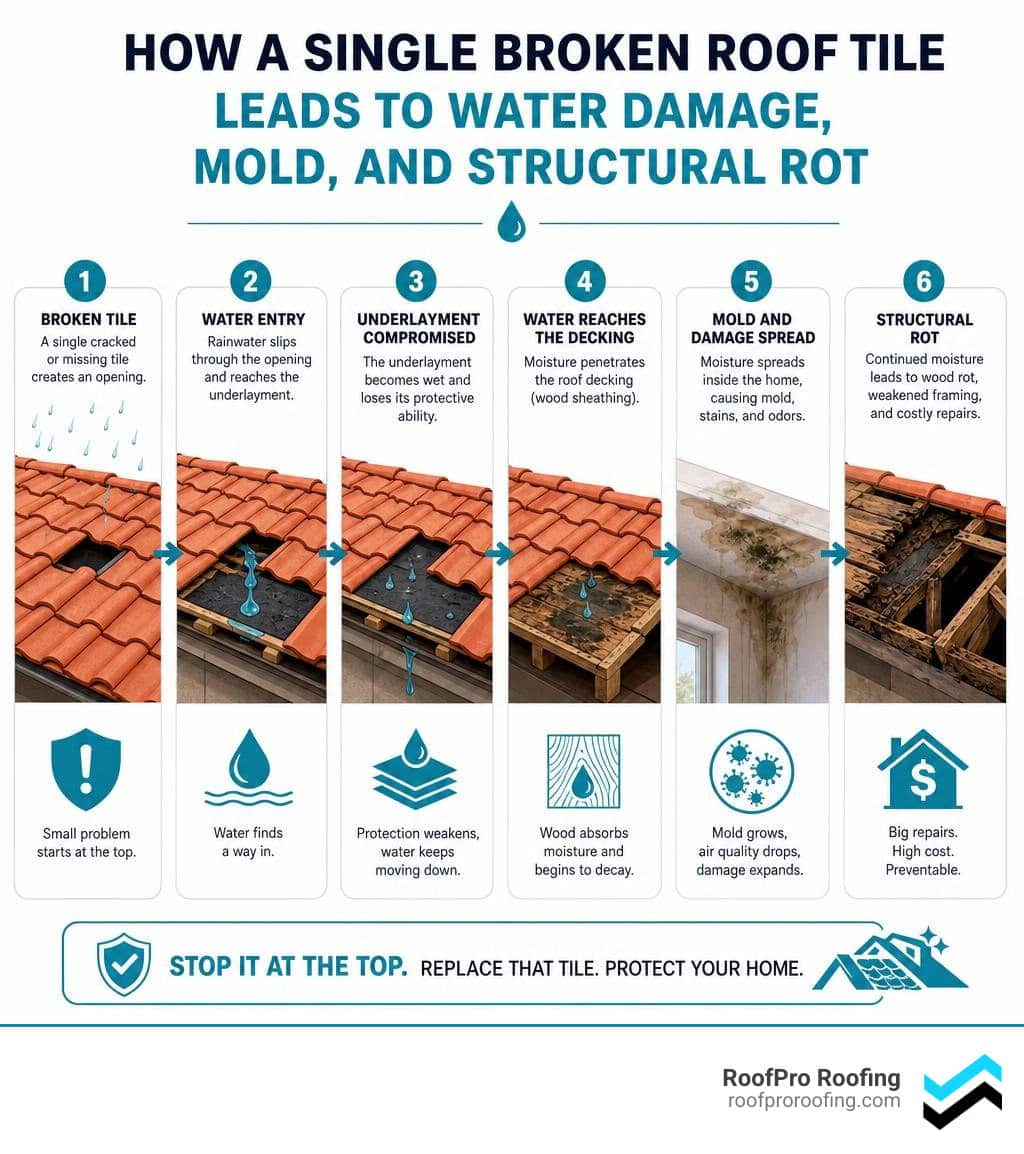
Broken roof tile replacement terms made easy:
Why Prompt Broken Roof Tile Replacement Matters
When a tile cracks or slips, the clock starts ticking. Many homeowners assume that because a tile roof is made of incredibly durable clay or concrete, a single broken piece is just a cosmetic issue. In reality, the tiles on your roof act as a protective shield, but they are not the primary waterproofing barrier. That crucial job belongs to the underlayment beneath them.
When a tile breaks, it leaves the underlying felt or synthetic underlayment directly exposed to Florida’s intense UV rays and heavy downpours. Standard roof underlayment is highly water-resistant, but it is not designed to withstand direct sunlight or standing water for long. Within just a few weeks of exposure, UV degradation can cause the underlayment to dry out, crack, and tear.
Once the underlayment fails, rainwater has a direct path to your wooden roof decking. In our humid climate, wet wood quickly leads to mold growth, structural rot, and active ceiling leaks.
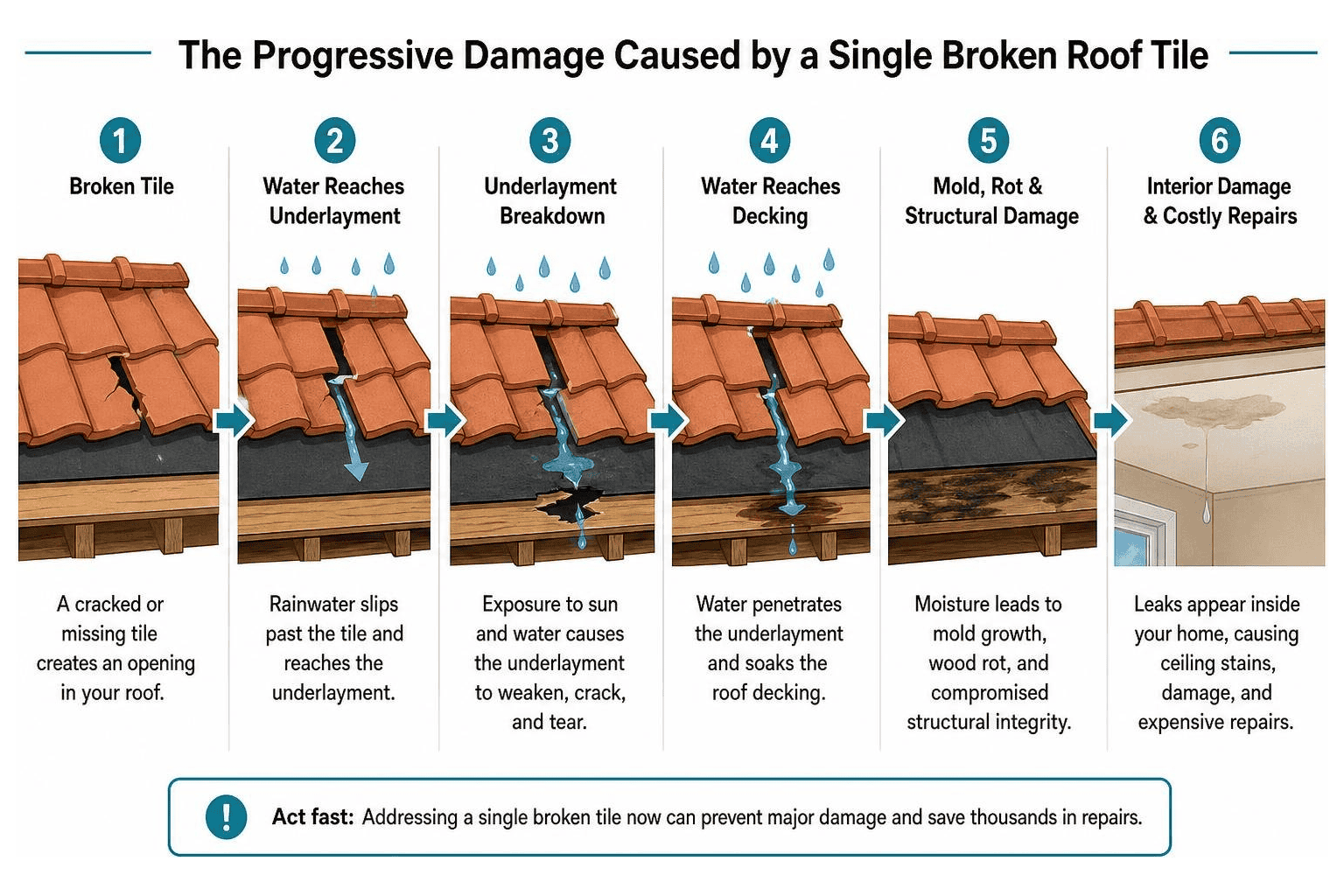
Because water can travel along the slope of your roof decking before dripping into your living space, a leak inside your home might appear far from the actual broken tile on the outside. This is why addressing a broken tile immediately is so vital. If you wait until you see water stains on your ceiling, you are likely looking at a much larger, more expensive restoration project.
If you suspect your roof is nearing the end of its overall lifespan or has widespread damage, it helps to understand your options. You can explore our residential tile options to see different styles, or learn how to spot signs you need a new roof to determine if a simple repair is enough.
Identifying and Sourcing Replacement Tiles
Before you can replace a tile, you have to find an exact match. This is often the trickiest part of the entire process. Roof tiles are not one-size-fits-all; they must match in material, size, profile, and locking mechanism to maintain a watertight seal.
To identify your tile, look for manufacturer stamps on the underside of any broken pieces you can safely access. These stamps often list the brand and model number. Additionally, pay attention to the material:
- Clay/Terracotta: These tiles have a smooth or natural earthy texture and will make a distinct, clear ringing sound when gently tapped with a tool.
- Concrete: These are heavier, have a grainier texture, and sound duller when tapped. They are also more prone to hairline cracks from thermal expansion and contraction over time.

If you cannot find a stamp, you will need to match the profile (such as S-tile, flat tile, or W-tile). If you are located in the Florida Panhandle or down south, matching the exact tile is critical to keeping your home compliant with local wind mitigation standards. For professional assistance in these regions, you can rely on local experts who understand regional building codes and wind requirements. Whether you need tile replacement in Destin, Santa Rosa Beach, or down the Gulf Coast in North Port, working with a licensed contractor ensures your roof remains fully compliant and secure.
Sourcing Discontinued Styles for Broken Roof Tile Replacement
If your roof is more than a decade old, there is a very high chance your original tile style has been discontinued. Manufacturers like Hanson, Homestead, Westile, La Casa by Staco, and Life Tile by Monier have either changed their molds or gone out of business entirely over the years.
When a tile is discontinued, you cannot simply go to a big-box hardware store to buy a replacement. Instead, roofers rely on what we call a “tile boneyard.” Distributors like RWC Building Products (who have been operating since 1958) maintain massive yards filled with leftover, salvaged, and rare discontinued tiles.
To source a hard-to-find tile:
- Collect a sample: If possible, retrieve a complete broken tile (even if it is in a couple of pieces) to bring to a specialty roofing supplier.
- Take clear photos: Take high-quality photos of both the top and bottom of the tile, as well as the interlocking side channels.
- Submit an inquiry: Many specialty suppliers allow you to upload photos directly to their websites or email them along with your zip code and the quantity needed to help locate a match in their inventory.
Step-by-Step Guide to Replacing a Broken Roof Tile
Replacing a roof tile is a physical, high-stakes game of Jenga. Because tiles interlock and overlap, removing one tile incorrectly can easily crack the surrounding ones, turning a simple afternoon fix into a major headache.
Before starting, safety must be your absolute priority. Never step onto a roof without a properly secured ladder stabilizer and a fall-arrest safety harness anchored to a secure point. Ensure you are wearing non-slip, rubber-soled footwear, and never attempt roof work in wet, windy, or extremely hot conditions (as wet tiles become incredibly slick).
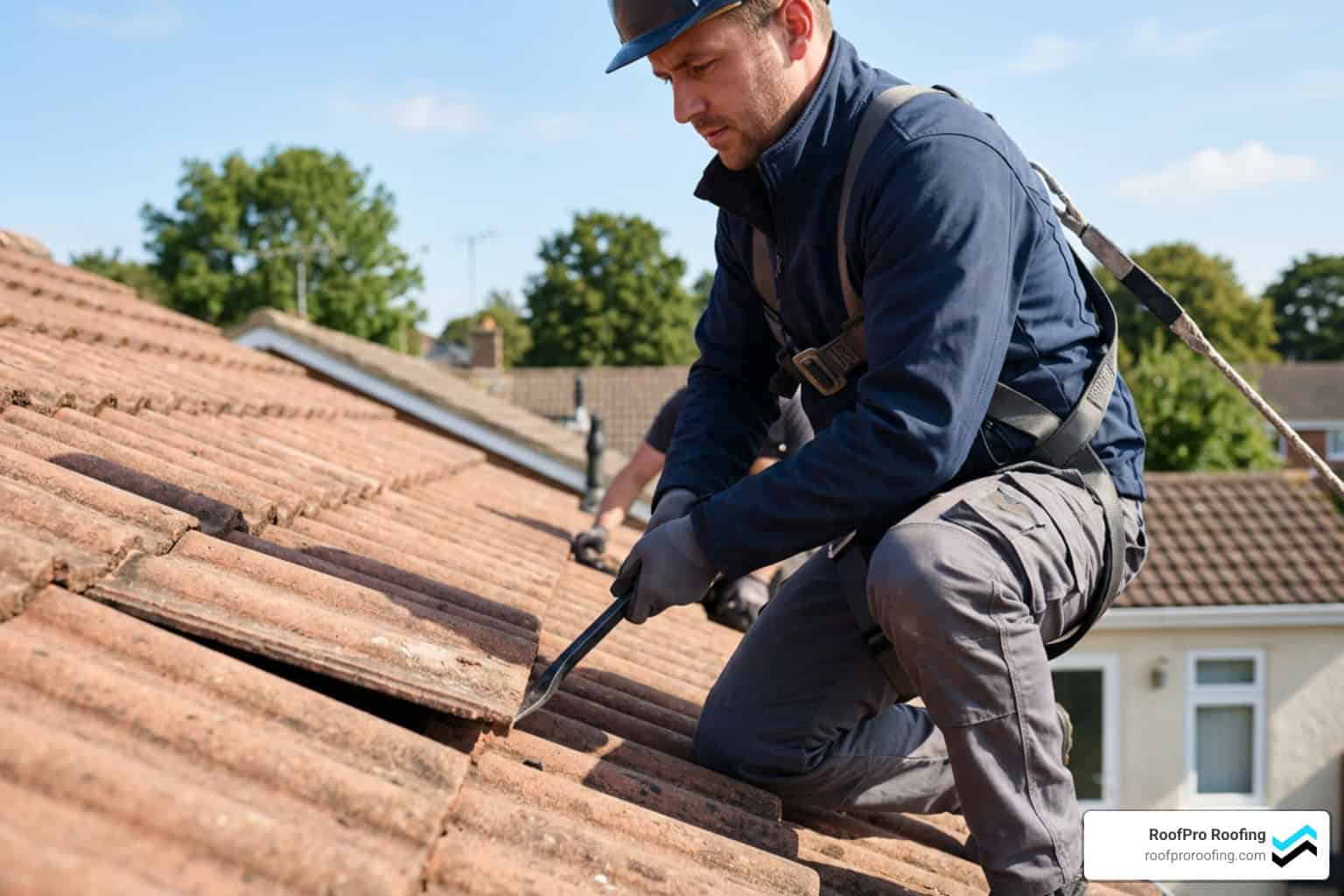
Before installing any new tile, you must inspect the wooden battens and underlayment underneath. If you find rotten wood battens or torn underlayment, those must be repaired first. For a general visual walkthrough of the replacement process, you can review this roofing tile replacement guide.
DIY Steps for a Simple Broken Roof Tile Replacement
If you have a low-slope roof, comfortable access, and matching replacement tiles on hand, here is how to perform a basic replacement:
- Expose the damaged tile: Gently slide two wooden wedges or shims under the overlapping tiles directly above and to the side of the broken tile. This lifts them slightly, relieving pressure without putting force on their fragile corners.
- Remove the broken pieces: If the tile is already in pieces, carefully pull them out. If it is still held by a nail or clip, do not use a standard pry bar to yank it, as this can shatter adjacent tiles. Instead, use a long-handled hacksaw to slide underneath and carefully cut the nail shank.
- Inspect and clean the area: Clear away all old nails, debris, and dust from the tile bed. Carefully check the exposed underlayment. If there are small nail holes, seal them with a generous dab of high-quality roofing cement.
- Prepare the replacement: Apply a code-approved, heavy-duty tile adhesive to the top of the replacement tile where it will overlap, and a small amount to the underside where it meets the tile below.
- Slide the new tile into place: Carefully slide the replacement tile up into the gap, ensuring its interlocking side channels engage perfectly with the neighboring tiles.
- Seat the tile and remove shims: Gently press the tile down so the adhesive makes solid contact. Carefully slide out your wooden wedges, allowing the surrounding tiles to lower back into their natural, flush positions.
If you want more context on managing leaks or dealing with tiles that have shifted out of place, read our DIY guide to fixing tile roof leaks or learn how to manage a slipped roof tile repair.
Material-Specific Techniques: Clay, Concrete, Slate, and Interlocking Tiles
Different roofing materials require distinct handling techniques during a broken roof tile replacement:
- Clay Tiles: These are highly brittle. When replacing clay, you must walk with extreme care, stepping only on the lower third of the tiles directly over the structural battens. Never drop tools on clay tiles.
- Concrete Tiles: While tougher than clay, concrete is highly heavy and porous. Concrete replacements must be sealed properly to prevent moisture absorption, which can lead to premature erosion during intense weather cycles.
- Slate Tiles: Real slate does not interlock like clay or concrete. It is typically secured with copper nails. Replacing a slate tile requires a specialized tool called a “slate ripper” to slide under the tile, hook the nail, and yank it out. The new slate is then slid into place and secured using a copper slip or hook.
- Interlocking Tiles: These feature intricate water channels on their edges. When applying adhesive to interlocking tiles, the sealant must always be placed above the headlap line. If you place adhesive directly in the water channel, it will block the natural path of draining water, causing water to back up under the roof and create a major leak.
DIY vs. Professional Tile Repair: Costs and Risks
Is a broken roof tile replacement a true DIY project? While replacing one or two accessible tiles is technically possible for a handy homeowner, the risks are high.
The primary danger is walking on the roof incorrectly. If you step on the center field of a tile rather than the reinforced lower third where it overlaps the batten, you will crack it. It is incredibly common for homeowners to climb onto their roof to fix one broken tile, only to crack three more in the process. Additionally, fall hazards are a serious concern; falls from heights remain a leading cause of residential construction injuries.
To help you weigh your options, here is a realistic look at the costs involved:
| Expense Category | DIY Repair Cost | Professional Repair Cost |
|---|---|---|
| Replacement Tiles | $15 – $60 (per tile) | Included in service |
| Safety Equipment & Tools | $150 – $300 (harness, ladder stabilizer, adhesive) | Included in service |
| Labor & Setup | $0 (your own time and sweat) | $200 – $500 (standard single-tile repair) |
| Risk of Additional Damage | High (potential $3,000+ in broken tiles/leaks) | None (covered by professional guarantees) |
If you are dealing with steep pitches, complex valley areas, or multiple broken tiles, hiring a professional is always the smartest, safest choice.
For homeowners across our Florida service areas, professional assistance is readily available. RoofPro Roofing provides expert tile repair and replacement services across Fort Lauderdale, Crestview, Mary Esther, Navarre Beach, Pace, and surrounding communities. Our team has the specialized training, safety equipment, and local code knowledge to handle your tile roof with care, ensuring a seamless and lasting repair.
Frequently Asked Questions about Roof Tile Repair
How can I temporarily patch a broken tile if a replacement isn’t immediately available?
If you cannot find a matching replacement tile right away, you must protect the exposed underlayment from the elements. The most reliable temporary fix is using a piece of 0.019-thickness aluminum flashing.
Cut a piece of flashing slightly wider than the gap left by the broken tile. Slide it up under the overlapping tiles directly above the damaged area, ensuring it extends at least 4 inches underneath them and laps over the tile below in “shingle fashion.” Bend the top edge of the metal upward slightly to create a physical barrier against windblown rain. This creates a highly effective, waterproof bridge that will protect your home until your matching replacement tile is sourced.
Does home insurance cover broken roof tile replacement?
Whether your insurance covers tile repairs depends entirely on the cause of the damage.
- Covered: Sudden, accidental damage caused by a storm event (such as a fallen tree branch or severe hail from a hurricane) is typically covered by standard homeowners insurance policies.
- Not Covered: General wear and tear, damage from aging, or cracks caused by foot traffic (such as an HVAC technician walking on your roof) are almost always excluded.
If your roof was damaged during a major storm, be sure to document the damage immediately with clear photos before making any temporary repairs. For professional support with storm-related issues, you can learn more about our storm damage roof repair services.
How often should I inspect my tile roof to prevent leaks?
We highly recommend performing a tile roof inspection twice a year — once in the spring and once in the fall — as well as immediately after any major high-wind or hail events.
You do not need to climb onto your roof to do this. In fact, we recommend staying safely on the ground and using a pair of binoculars to scan your roofline for slipped, crooked, or cracked tiles. Additionally, keep your gutters clean so water doesn’t back up under the eave tiles, and trim back any overhanging tree branches that could snap and fall onto your roof during a storm. If you ever spot an active leak during a storm, you can access our emergency roof repair options for rapid assistance.
Secure Your Florida Home with Professional Tile Roof Services
At RoofPro Roofing, we understand that your home is your most valuable asset. A tile roof is a beautiful, premium feature, but it requires specialized expertise to maintain its strength and beauty.
As a Florida-based contractor, we specialize in high-wind and coastal roofing systems. We are proud to be Fortified Roof and GAF-Certified, allowing us to offer lifetime workmanship guarantees that give you complete peace of mind. We know Florida building codes inside and out — including the critical 25% repair rule, which states that if more than 25% of a roof is repaired or replaced within a 12-month period, the entire roof must be brought up to current building code standards.
Whether you need a single tile replaced or a complete inspection after a major storm, our expert team is here to help.
Ready to get started? You can schedule professional residential tile services, explore our full range of roofing services, or read our Florida roof repair vs replacement guide to find the best path forward for your home.