Comparing Residential and Commercial Professional Roofing Services
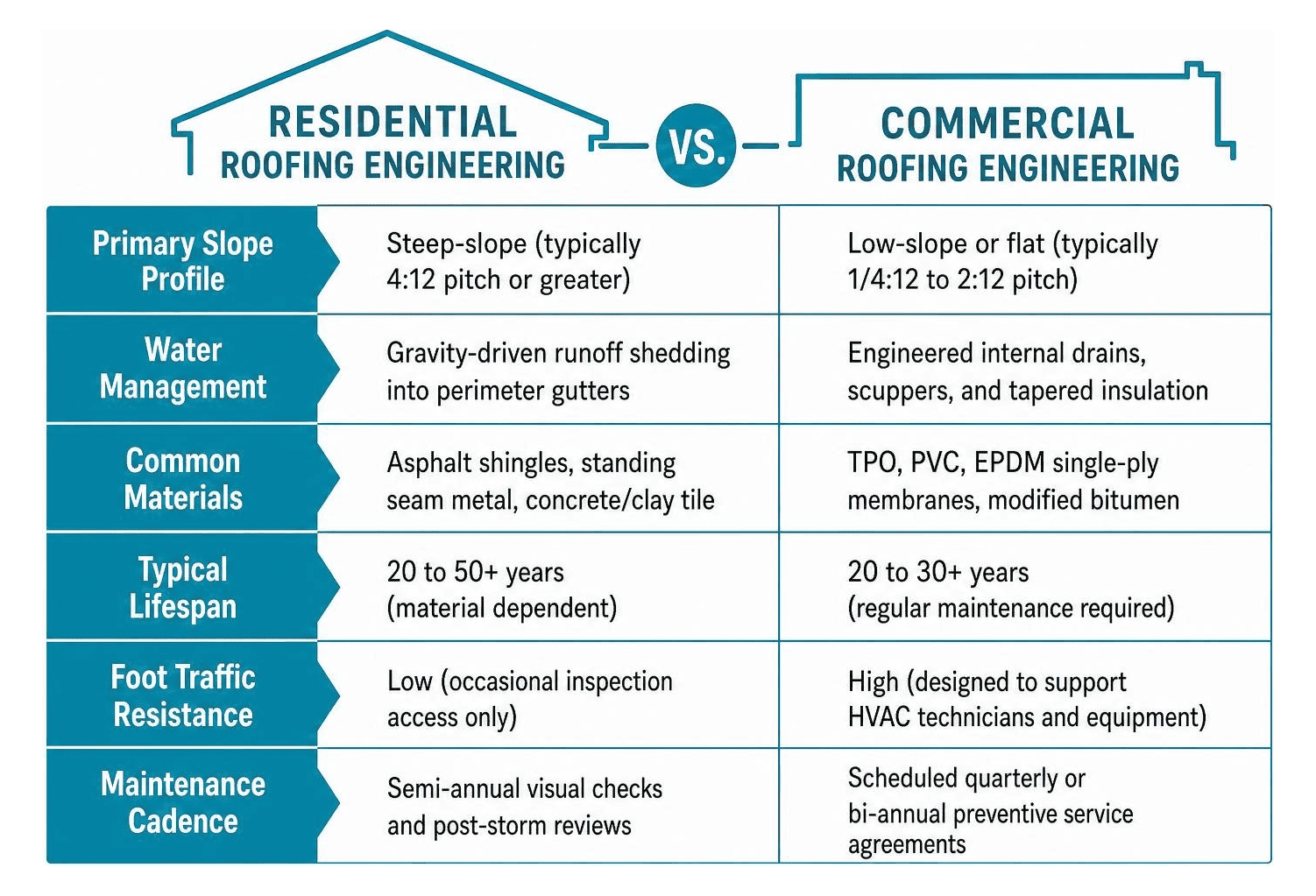
Whether dealing with a single-family coastal home or an industrial retail center, roofing systems must be engineered around specific architectural physics and building codes. The way water sheds, how the structure bears weight, and how crews approach maintenance differ dramatically between steep-slope homes and flat commercial buildings.
| Feature | Residential Roofing Systems | Commercial Roofing Systems |
|---|---|---|
| Primary Slope Profile | Steep-slope (typically 4:12 pitch or greater) | Low-slope or flat (typically 1/4:12 to 2:12 pitch) |
| Water Management | Gravity-driven runoff shedding into perimeter gutters | Engineered internal drains, scuppers, and tapered insulation |
| Common Materials | Asphalt shingles, standing seam metal, concrete/clay tile | TPO, PVC, EPDM single-ply membranes, modified bitumen |
| Typical Lifespan | 20 to 50+ years (material dependent) | 20 to 30+ years (regular maintenance required) |
| Foot Traffic Resistance | Low (occasional inspection access only) | High (designed to support HVAC technicians and equipment) |
| Maintenance Cadence | Semi-annual visual checks and post-storm reviews | Scheduled quarterly or bi-annual preventive service agreements |
Essential Elements of Professional Roofing Services for Homeowners
Steep-slope residential roofing relies primarily on gravity to move water quickly off the roof deck before it can pool. Architectural shingles remain a popular and cost-effective option, and our team provides high-performance residential shingle installations built to endure extreme weather conditions.
For homeowners seeking maximum durability against tropical winds and coastal air, investing in sturdy residential metal panels offers superior uplift resistance and exceptional longevity. In many coastal and master-planned neighborhoods, architectural aesthetics call for classic, heavy-duty profiles; our weather-rated residential tile systems provide excellent thermal resistance alongside timeless beauty.
Beyond outer surfaces, proper attic ventilation balances intake at the soffits with exhaust at the ridge. This airflow prevents heat and moisture buildup, protecting roof decking from premature rot while keeping indoor living spaces cooler.
Commercial Professional Roofing Services for Low-Slope Buildings
Commercial structures feature flat or low-slope profiles that require continuous, waterproof barriers rather than overlapping water-shedding pieces. We install high-grade commercial flat low slope assemblies engineered with durable membranes such as TPO and PVC. These systems feature heat-welded seams that turn large surfaces into watertight shields.
Commercial roofs also support heavy mechanical loads, including commercial HVAC chillers, exhaust fans, and piping networks. Because water cannot simply roll off a flat deck, drainage architecture relies on tapered insulation boards directing flow toward internal drains and scuppers.
When an existing membrane reaches the end of its serviceable life, property managers benefit from planned commercial replacement strategies designed to minimize downtime for active businesses while ensuring compliance with local wind-uplift codes.
How to Choose a Qualified Contractor and Avoid Roofing Scams
Finding a reliable roofing partner requires looking closely at licensing, safety, and manufacturer backing. A dependable contractor holds active state licensing, maintains extensive general liability insurance, and carries full workers’ compensation coverage to protect property owners from liability.
Top-tier contractors also carry elite manufacturer certifications. Nationally, GAF Master Elite status is held by fewer than 750 contractors across the entire United States, representing the top 3% of roofing professionals. Connecting with verified providers through certified manufacturer networks ensures you work with installers who follow strict application standards and can offer extended factory-backed warranties.
Unfortunately, severe weather often attracts out-of-state “storm chasers.” These transient operators move into storm-affected neighborhoods, solicit door-to-door, collect hefty upfront deposits, and complete rushed, low-quality work before leaving the area.
To protect your home and wallet, watch out for these common red flags:
- Demands for large cash payments or signed blank contracts upfront.
- High-pressure tactics claiming your roof will collapse unless you sign an immediate contingency agreement.
- Unmarked work vehicles lacking permanent company branding or local contact details.
- Offers to “waive” or cover your insurance deductible, which constitutes insurance fraud under state regulations.
- Lack of a verifiable, permanent physical office address within the region.
Always verify that the roofer has a local office, a solid regional track record, and a written scope of work detailing every line item before any project begins.
Identifying Roof Damage, Inspections, and Insurance Claims
Roof issues rarely fix themselves. Left unattended, minor exterior wear turns into structural rot and costly interior water damage. Identifying subtle signs of distress early lets property owners address concerns before the next weather event strikes.
Common indicators of roofing distress include:
- Cracked, curled, or missing shingles after gusty winds.
- Heavy granule loss accumulating in gutters or at downspout exits.
- Loose, rusted, or damaged flashing around chimneys, skylights, and valley intersections.
- Dark water stains or mold growth appearing on attic rafters or upper-floor ceilings.
- Soft or spongy spots felt underfoot on the roof decking.
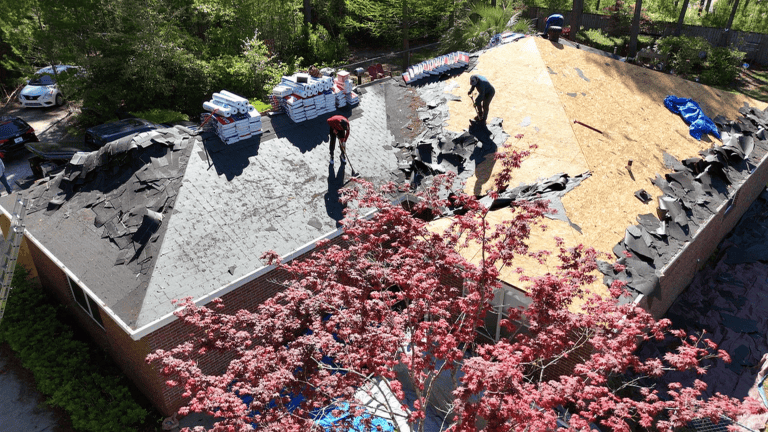
When issues emerge, opting for prompt residential repair solutions can extend the lifespan of your roof and prevent leaks from spreading deeper into your home.
Following severe weather, homeowners often must navigate the complexities of filing an insurance claim. Professional roofing contractors streamline this process through structured support:
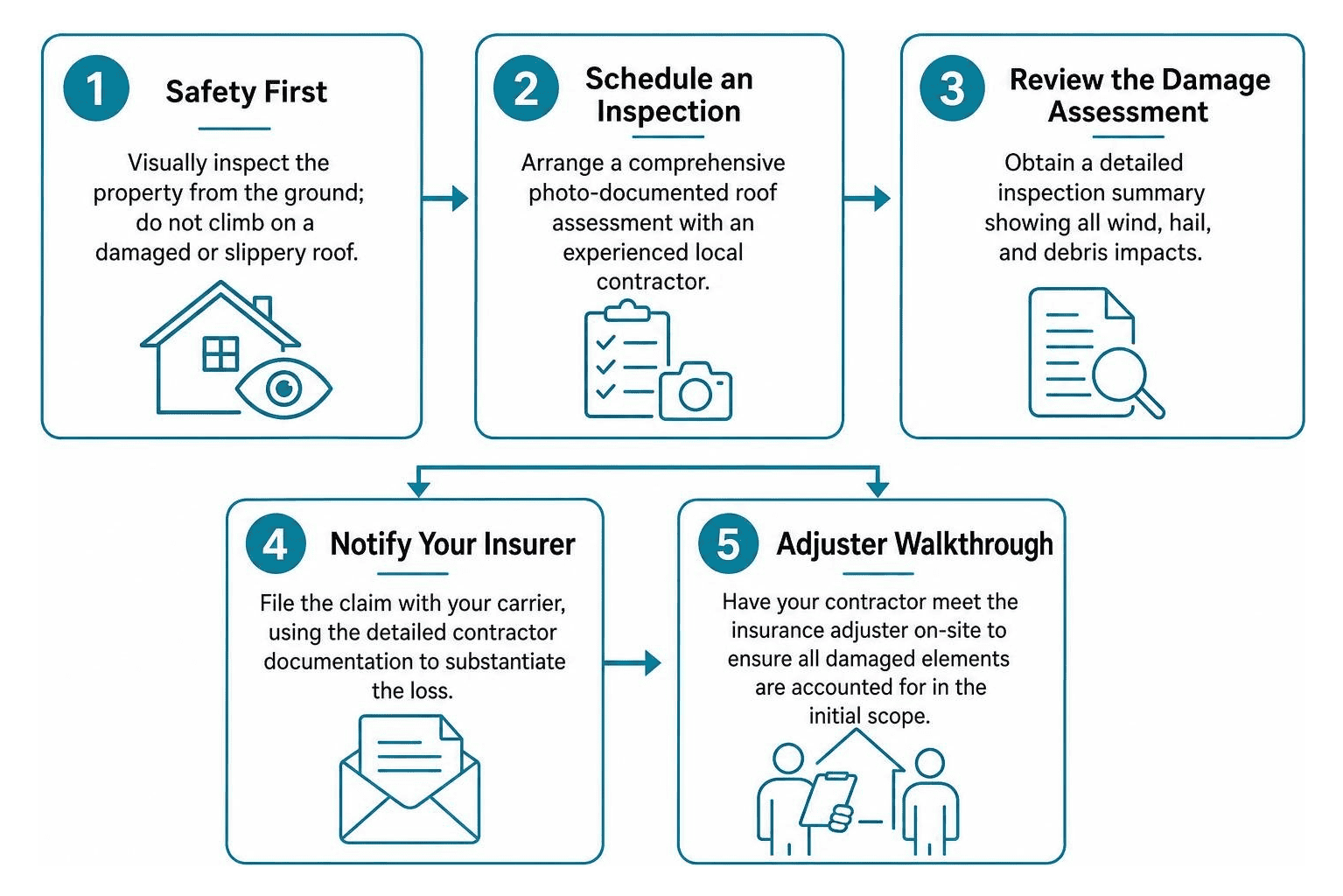
- Safety First: Visually inspect the property from the ground; do not climb on a damaged or slippery roof.
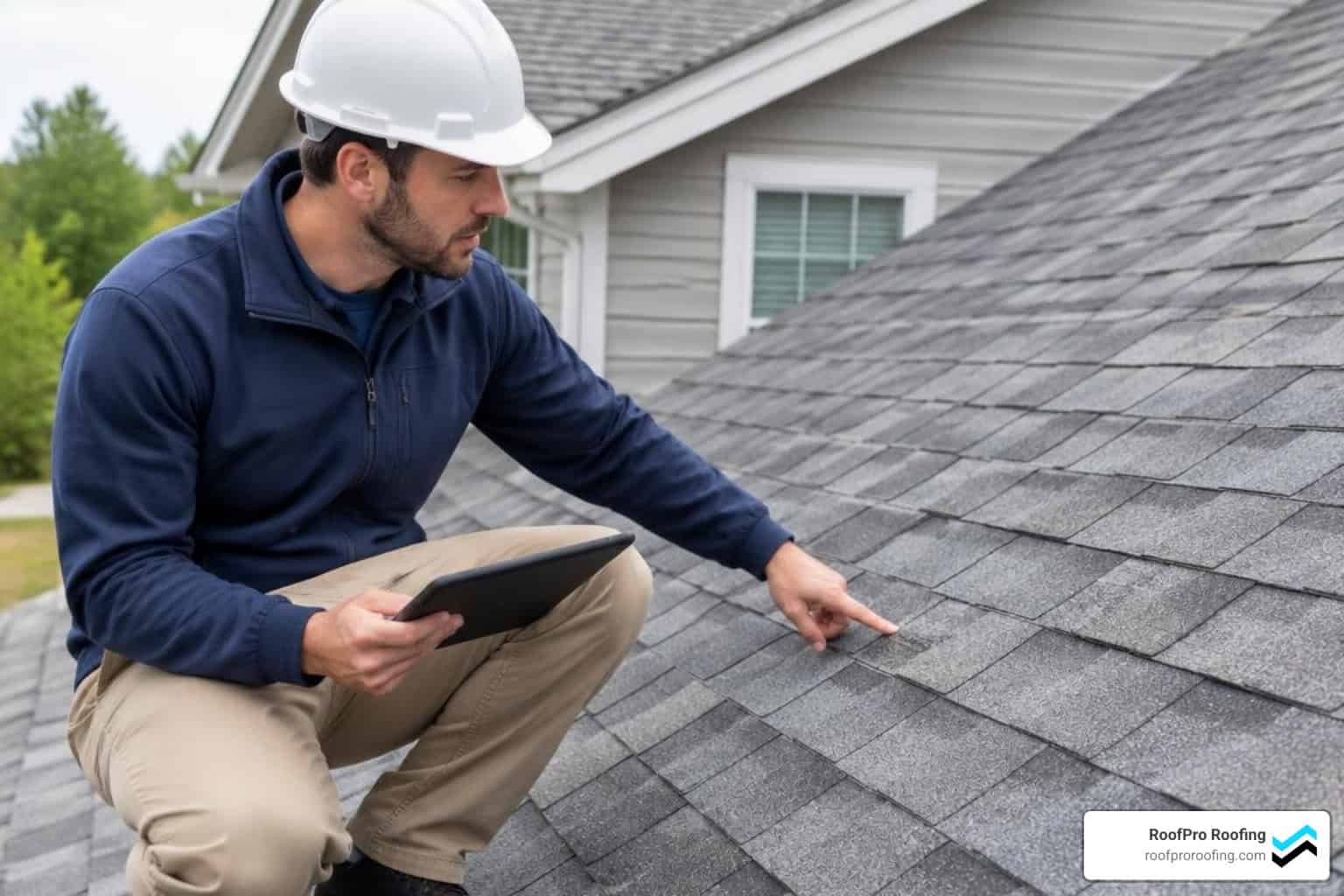
- Schedule an Inspection: Arrange a comprehensive photo-documented roof assessment with an experienced local contractor.
- Review the Damage Assessment: Obtain a detailed inspection summary showing all wind, hail, and debris impacts.
- Notify Your Insurer: File the claim with your carrier, using the detailed contractor documentation to substantiate the loss.
- Adjuster Walkthrough: Have your contractor meet the insurance adjuster on-site to ensure all damaged elements are accounted for in the initial scope.
Our team routinely assists homeowners with managing storm damage claims, providing transparent photographic evidence and clear technical assessments that keep adjusters and property owners on the same page without high-pressure sales pitches.
Material Selection, Energy Efficiency, and Warranty Protection
Selecting the right roofing material balances architectural style, environmental demands, and long-term operating costs. In warm, sunny climates, prioritizing solar reflectance helps reduce heat buildup in attic spaces and cuts cooling expenses.
Key energy-efficient and resilient material options include:
- Cool-Roof Asphalt Shingles: Formulated with specialized reflective granules that meet elevated Solar Reflectance Index (SRI) targets, reflecting solar energy away from the building rather than absorbing it.
- Standing Seam Metal Panels: Naturally reflective and rapidly sheds thermal heat, offering exceptional wind resistance and a lifespan often exceeding 50 years.
- Concrete and Clay Tiles: Offer natural thermal mass and elevated installation profiles that promote continuous air circulation beneath the tile surface, slowing heat transfer into the building envelope.
Understanding warranty structures is vital for long-term peace of mind. A material warranty protects solely against manufacturing defects in the shingle, tile, or membrane itself. However, the majority of roof failures stem from incorrect installation or faulty flashing.
A comprehensive workmanship warranty covers the labor and installation craftsmanship. Premium programs, such as the GAF Golden Pledge warranty, combine up to a 50-year non-prorated material warranty with a 25-year manufacturer-backed workmanship guarantee. This level of coverage ensures that even if an installer retires, the manufacturer honors the labor warranty.
To help property owners invest in dependable, weather-resilient roofing systems without straining their upfront budgets, flexible financing plans allow costs to be divided into manageable monthly payments.
Frequently Asked Questions About Roofing Services
How long does a typical roof replacement project take?
Most standard residential roof replacements take between 1 and 3 days of active labor. However, several project variables can influence the overall timeline:
- Roof Size and Pitch: Larger homes, multi-story layouts, or steep-slope angles require extra staging, safety rigging, and handling time.
- Material Complexity: Architectural shingles install relatively quickly, whereas custom metal panels, clay tile, or flat membrane systems take longer to align, fasten, and seal.
- Decking Repairs: If tear-off reveals rotted plywood decking or damaged framing from old hidden leaks, repairs must be completed before new underlayment goes down.
- Weather Conditions: High winds, rain, or lightning storms pause roof installations immediately to maintain crew safety and keep the underlying structure dry.
What is the difference between a material warranty and a workmanship warranty?
A material warranty is issued by the product manufacturer (such as GAF or CertainTeed) and covers structural defects in the roofing products, such as thermal splitting or premature breakdown. A workmanship warranty is provided by the installation contractor to cover errors in the application process, including misdriven fasteners, incorrect valley overlaps, and faulty flashing around penetrations.
Opting for elite manufacturer-backed programs links these two protections together, ensuring your installation is inspected, certified, and guaranteed by both the roofer and the manufacturer.
How do cool-roof shingles and reflective materials lower utility bills?
Standard dark roofing surfaces absorb solar radiation, heating up to 150°F or higher on sunny summer afternoons. This intense heat radiates directly into the attic, warming the ceiling plane and forcing air conditioning systems to work harder.
Cool-roof shingles and reflective metal systems incorporate specialized granules and factory coatings that reflect a larger percentage of solar rays back into the atmosphere while releasing absorbed heat quickly. By keeping attic spaces significantly cooler, these reflective systems reduce indoor heat transfer, ease the demand on your air conditioner, and lower monthly cooling bills.
Secure Your Property With Expert Roofing Solutions
Your roof plays a vital role in safeguarding your home, family, and commercial assets against harsh coastal elements. Choosing a certified, locally established contractor who provides transparent photo inspections, top-tier manufacturer warranties, and lifetime workmanship coverage ensures your investment holds up through every season.
If you are noticing early signs of roof wear, recovering from severe wind and storm damage, or planning a full exterior upgrade, our team is here to help. Contact RoofPro Roofing today to schedule professional roofing services and receive a thorough, no-pressure inspection from our factory-certified roofing specialists.