Why Finding the Right Clay Tile Roofers Matters for Your Home
If you need clay tile roofers, here’s what you need to know upfront:
- Clay tile roofs can last 100 years or more — but only with proper installation and qualified repairs.
- Always hire a roofer with specific clay tile experience, not just a general roofing contractor.
- Look for licensing, insurance, and manufacturer certifications (such as GAF Master Elite or equivalent).
- Verify the roofer uses quality underlayment, proper flashing, and waterproofing — clay tile installation is more complex than asphalt shingles.
- Ask about material warranties — top manufacturers like Ludowici offer up to 75-year material warranties.
Clay tile is one of the most durable and beautiful roofing materials available. You’ll find it on Mediterranean villas, Spanish-style estates, and historic buildings across the country. But here’s the problem: not every roofer knows how to work with it.
Clay tile is heavier, more fragile underfoot, and more technically demanding to install and repair than asphalt shingles or metal roofing. Hiring the wrong contractor can mean cracked tiles, failed waterproofing, and leaks that cost far more to fix than the original repair would have.
For Florida homeowners especially, the stakes are high. Storm damage, intense heat, and coastal humidity put every roofing system under pressure — and clay tile roofs are no exception.
My name is Byron Toups, and after more than a decade working with roofing contractors across the country before founding RoofPro Roofing, I’ve seen how quickly a poorly executed clay tile job can turn into a costly disaster — and I’ve built my team’s expertise around making sure Florida homeowners never have to deal with that. In this guide, I’ll walk you through everything you need to know to find and hire qualified clay tile roofers with confidence.
Understanding Clay Tile Roofing vs. Concrete Alternatives
When you look up at a beautiful, Spanish-style home in Fort Lauderdale or Destin, you might think you’re looking at genuine clay. However, there is a good chance it could be concrete. Understanding the difference between these two popular materials is crucial before you hire clay tile roofers to repair or replace your system.
While both options fall under the tile umbrella, they are made from entirely different materials, behave differently in the Florida climate, and carry different price tags. If you are weighing your choices, checking out our comprehensive guide on The Pros and Cons of Different Roofing Materials can help you see how tile stacks up against options like metal or architectural shingles.
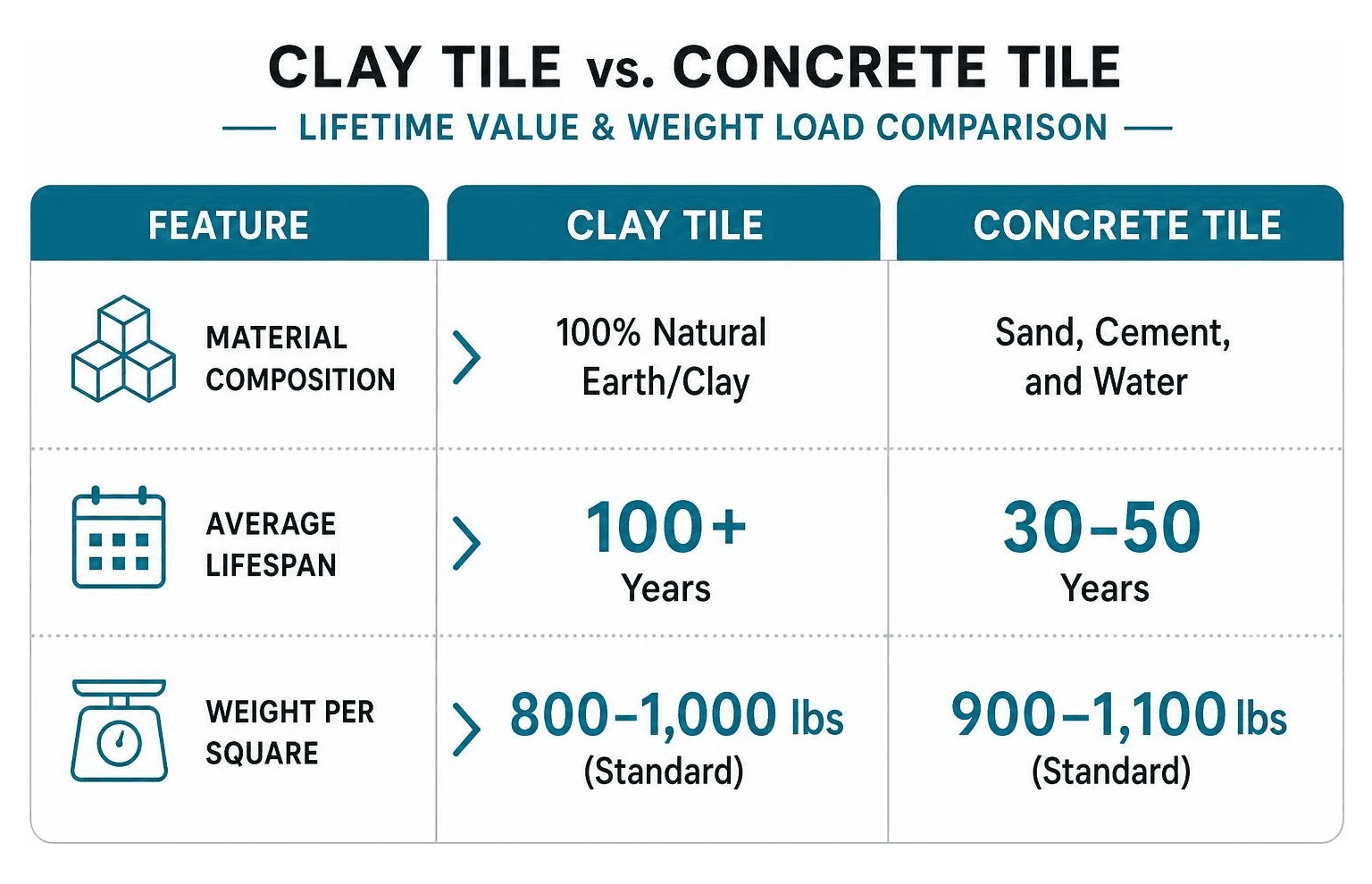
| Feature | Clay Tile Roofing | Concrete Tile Roofing |
|---|---|---|
| Material Composition | 100% Natural Earth/Clay | Sand, Cement, and Water |
| Average Lifespan | 100+ Years | 30 to 50 Years |
| Weight per Square | 800 to 1,000 lbs (Standard) | 900 to 1,100 lbs (Standard) |
| Color Longevity | Permanent (Baked-in ceramic glaze) | Fades over time (Surface pigments) |
| Water Absorption | Very low (approx. 1% to 6%) | Higher (approx. 8% to 13%) |
| Initial Cost | Higher upfront investment | Moderate / Value-Engineered |
What is Clay Tile Roofing?
Genuine clay tile roofing is made from natural clay that is molded into shape and fired in a high-temperature kiln. This baking process, which has remained largely unchanged for centuries, vitrifies the clay. Vitrification fuses the clay particles together, making the tile incredibly dense and virtually impervious to water.
Clay tiles are often referred to as Spanish roof or terra cotta shingles. They come in several classic profiles, including:
- Barrel Tiles (Mission Style): Semi-cylindrical tiles laid in alternating concave and convex rows.
- Spanish S-Tiles: A single tile shaped like an “S”, combining the pan and cover into one piece for faster installation.
- Shingle, Shake, and Slate Alternatives: Modern clay tiles manufactured to look like wood shakes or natural slate, giving you the historic aesthetic without the rot or fire risk.
Leading national manufacturers like Ludowici, US Tile, MCA (Maruhachi Ceramics of America), Verea, and Westlake Royal Roofing Solutions produce these high-quality tile brands. They offer everything from natural unglazed terra cotta to high-gloss glazed finishes that can be customized to fit complex architectural designs like turrets and curved roofs.
Key Differences in Weight and Cost
The weight of your roofing material dictates the structural support your home needs. Standard clay tiles weigh between 800 and 1,000 pounds per “square” (a 10-foot by 10-foot area). Standard concrete tiles can weigh even more.
Because of this intense structural weight, if you are transitioning from a light material like asphalt shingles to standard clay, you must get a professional structural analysis. A structural engineer must verify that your home’s framing can handle the load.
To bypass this issue, some manufacturers offer lightweight concrete tile options (weighing under 6.4 pounds per square foot) that can be installed on standard framing without extra reinforcement. However, genuine clay tile remains the gold standard for longevity.
In terms of pricing, clay tile is a premium product. While concrete tile serves as an excellent “value-engineered” alternative, genuine clay has a higher initial cost. However, when you look at the lifetime return on investment, clay often wins. Since a clay roof can easily last a century, you will not have to replace it multiple times like other materials. You can explore the latest market rates in our guide to New Roof Cost 2026.
Why Homeowners Choose Clay Tile Roofing
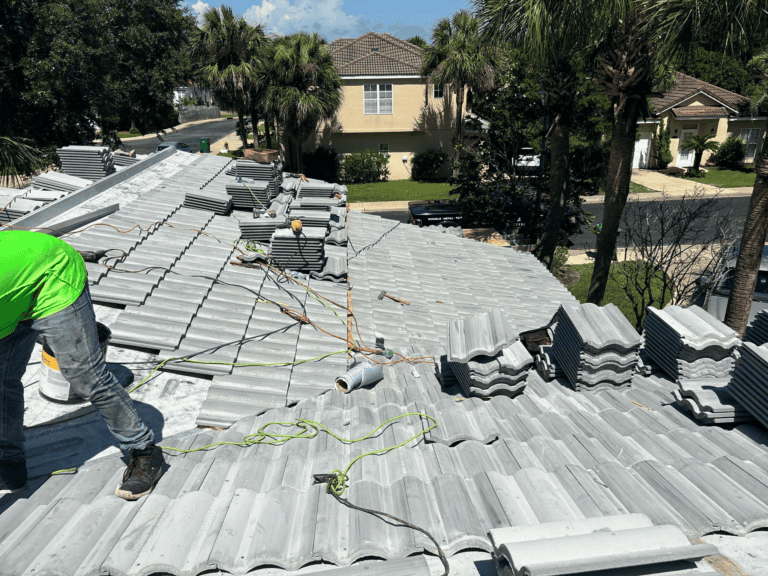
Homeowners across Florida’s Emerald Coast and southern coastlines choose clay tile because it is a lifetime investment that elevates a home’s curb appeal. But beyond its undeniable beauty, clay offers unmatched physical protection against the elements.
When you invest in a clay roof, you are buying peace of mind. Knowing how long these systems last is a key factor in making your decision; you can learn more about this by reading our analysis on the Average Roof Lifespan Florida.
Longevity and Weather Resilience
A properly installed clay tile roof can last 100 years or more. This incredible lifespan is due to the natural durability of fired clay.
- Wind Resistance: Heavy clay tiles are naturally wind-resistant. When installed by certified professionals using modern fastening systems, clay tile roofs can withstand hurricane-force winds, making them ideal for coastal Florida spots like Destin, Fort Lauderdale, and Pensacola.
- Fire Protection: Clay tiles carry a Class A fireproof rating—the highest safety rating available. They do not burn, providing a critical shield for your home.
- Freeze-Thaw Resistance: While we do not get heavy freezes in Florida, clay tiles designed to meet ASTM C1167 Grade 1 standards are engineered to resist severe freeze-thaw cycles without cracking.
- Hail and Impact Resistance: Fired clay is tough enough to handle heavy hail and falling debris without puncturing.
Of course, even the toughest roofs can experience minor issues over time due to falling branches or severe storms. If a tile shifts out of place, getting a prompt Slipped Roof Tile Repair is essential to keep your underlayment protected from the sun and rain.
Energy Efficiency and Sustainability
Did you know that a clay roof can actively lower your cooling bills? Many clay tile systems are Cool Roof Rating Council (CRRC) rated. They feature natural thermal insulation properties and reflective finishes that bounce solar heat away from your home, which can help reduce attic heat gain during Florida’s hottest months.
Clay is also one of the most eco-friendly roofing materials on the market:
- Recyclable: At the end of its long life, clay can be crushed and recycled into new building materials.
- Recycled Content: Brands like US Tile are leaders in sustainable manufacturing. US Tile was the first clay tile roof in the world to earn Cradle-to-Cradle Gold certification, using up to 59% recycled content.
Key Considerations When Hiring Professional Clay Tile Roofers
Because clay tile is a highly specialized material, you cannot hire just any contractor who puts up asphalt shingles. You need experienced clay tile roofers who understand the unique structural, waterproofing, and handling requirements of this premium product.
Before signing a contract, it is highly recommended to read our expert tips on How to Find Reliable Roof Repair to avoid common hiring pitfalls.
Essential Qualifications for Clay Tile Roofers
When vetting local contractors in Florida, look for these specific qualifications:
- Specialized Experience: Ask the contractor how many clay tile roofs they have repaired or installed in the last year. Request local references.
- Proper Licensing and Insurance: Ensure they hold a valid Florida certified roofing contractor license and carry robust general liability and workers’ compensation insurance.
- Manufacturer Certifications: Top-tier manufacturers like Ludowici or Westlake Royal Roofing Solutions offer specialized training. A contractor certified by these brands has proven they understand the precise installation guidelines required to keep your warranty intact.
- No-Subcontractor Policy: Ask if the crew doing the work actually works for the company. Companies that use their own trained employees maintain much tighter quality control than those that subcontract the work out to the lowest bidder.
Understanding Warranties and Material Standards
A clay roof is only as good as the warranty backing it up. When investing in a premium system, you should expect two types of protection:
- Material Warranties: High-quality clay tile manufacturers offer incredibly long warranties. For example, Ludowici products carry a stellar 75-year material warranty.
- Workmanship Warranties: This is provided by your roofing contractor and covers the physical installation. At RoofPro Roofing, we offer lifetime workmanship guarantees because we stand behind the precision of our labor.
To fully understand what is covered and what to look for in a contract, take a look at our detailed breakdown: Roofing Warranties Explained.
How to Find Certified Clay Tile Roofers Near You
If you live in Florida—whether in the panhandle (Destin, Santa Rosa Beach, Pensacola) or down south (Fort Lauderdale, North Port)—you need a roofer who understands coastal building codes and wind mitigation requirements.
For homeowners in Walton County and surrounding areas, working with local experts who know the unique salt-air and wind challenges of the Gulf Coast is a must. Check out our guide on Roofing Specialists Santa Rosa to see how we tailor our services to coastal environments.
The Specialized Installation and Repair Process
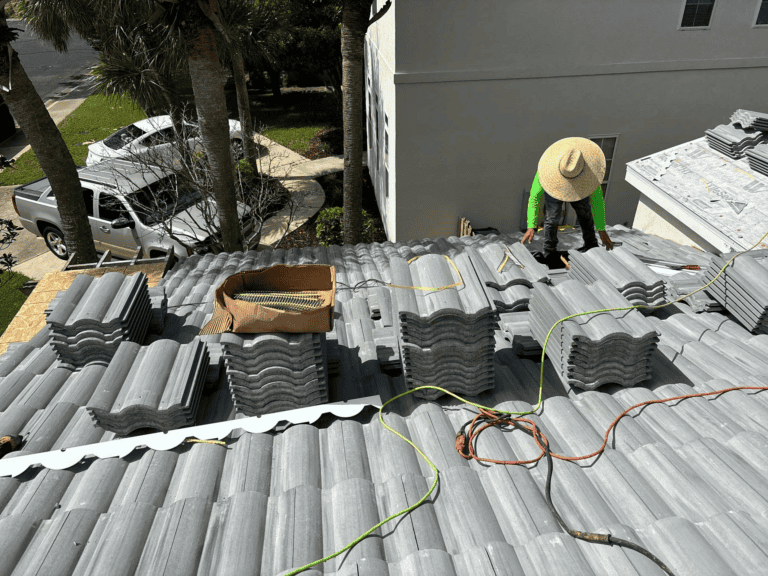
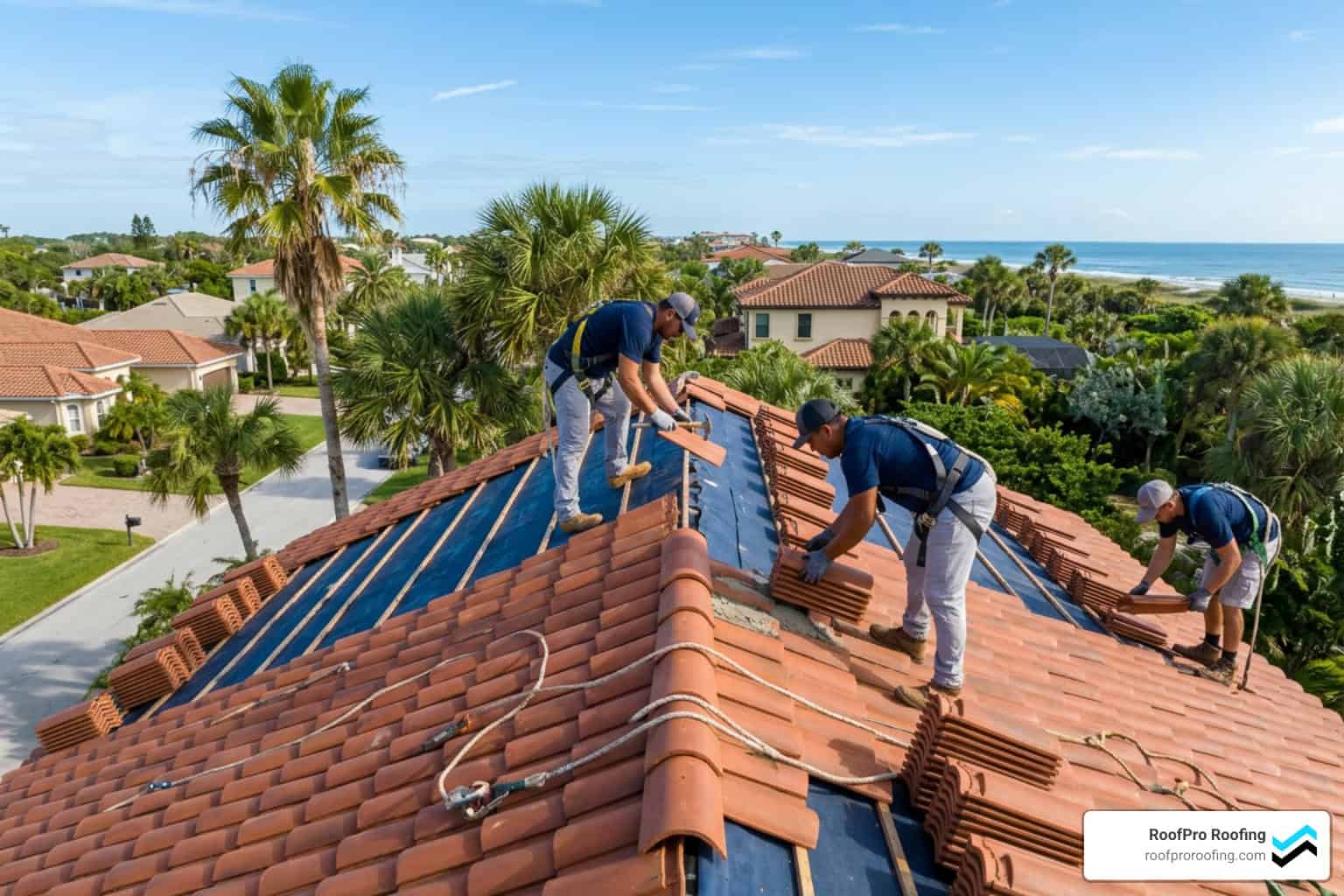
The installation of a clay tile roof is an art form. Unlike shingles, which are nailed down flat, clay tiles are part of a floating, water-shedding system. The tiles themselves are the primary shield against sun, wind, and impact, but the real waterproofing happens underneath.
Here is how a professional clay tile installation or major repair works:
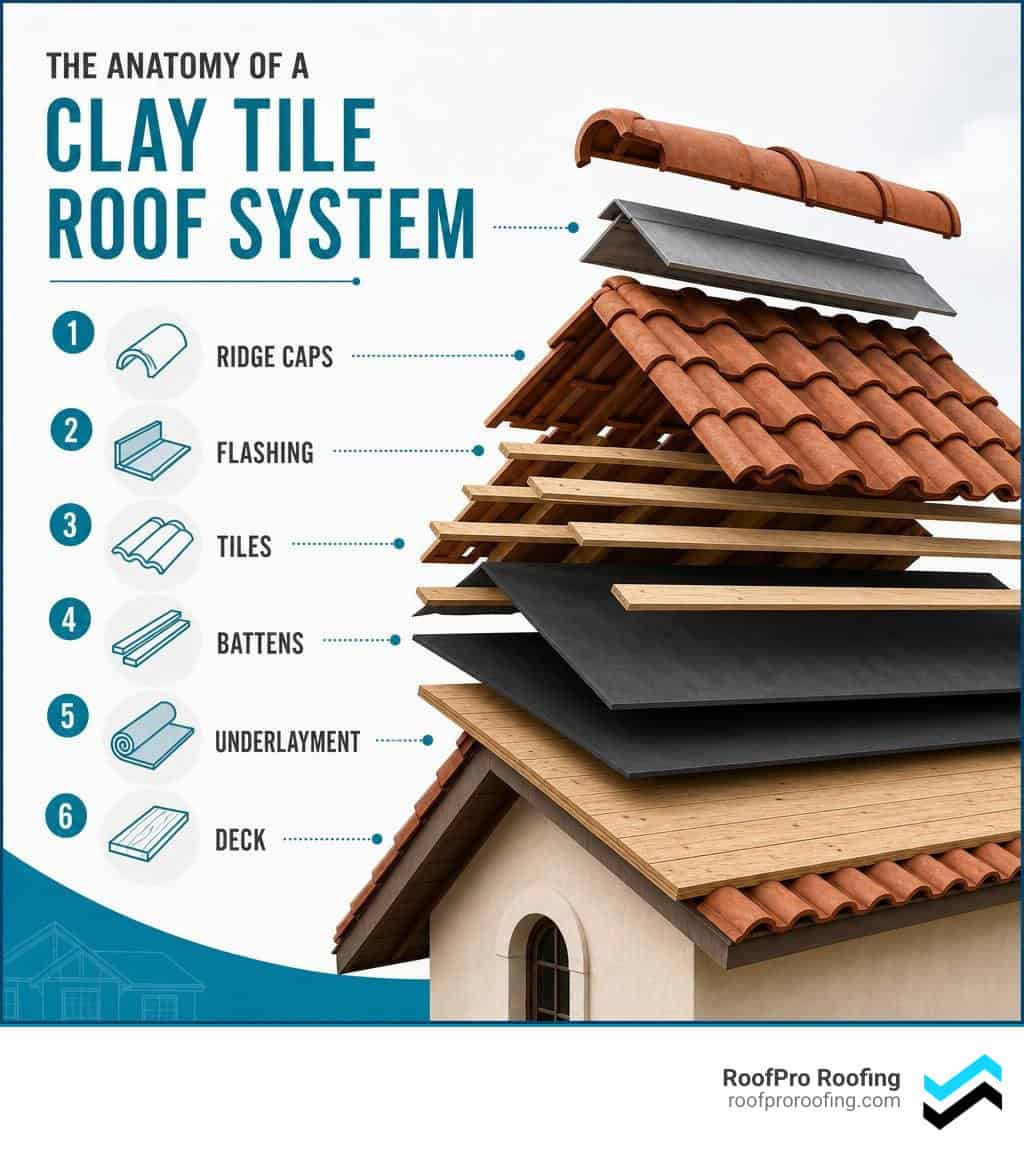
- Roof Preparation & Deck Inspection: The old roofing material is completely torn off. The wood decking is inspected for rot and reinforced if necessary.
- High-Grade Underlayment Installation: This is the most critical step. Since clay tiles have a 100-year lifespan, the underlayment beneath them must be incredibly durable. Professional clay tile roofers install premium, self-adhering modified bitumen underlayment that seals around nail penetrations to prevent water intrusion.
- Flashing and Waterproofing: Heavy-duty metal flashing (often copper or lead-coated copper) is installed in the valleys, chimneys, and roof-to-wall intersections. Proper flashing is vital because water flows heavily in these areas.
- Batten System Setup: In many installations, wooden or composite battens are nailed to the deck. The tiles are then hung from and fastened to these battens, creating an air gap underneath that aids in ventilation and energy efficiency.
- Tile Fastening: Tiles are secured using corrosion-resistant fasteners (like stainless steel or copper screws) and wind clips to ensure they stay locked down during high-wind events.
- Ridge and Hip Sealing: The ridges and hips are sealed with specialized weather-blocking materials and covered with ridge caps. If a ridge tile goes missing or breaks, it can expose the entire system to leaks. You can read about the risks of ignoring this in our article: Missing Ridge Tile Will It Leak.
If you are dealing with a minor issue and are tempted to climb up on the roof yourself, we highly recommend reading our Fix Tile Roof Leak DIY Guide first. It explains why walking on clay tiles is highly risky and why professional equipment is necessary to avoid causing further damage.
Frequently Asked Questions About Clay Tile Roofs
How long do clay tile roofs last?
When properly installed by certified clay tile roofers and maintained over time, a high-quality clay tile roof can easily last 100 years or more. The underlayment beneath the tiles may need to be replaced after 30 to 50 years, but the clay tiles themselves can often be salvaged and reinstalled. To learn more about how long different roofing systems survive in our state’s unique climate, read How Long Does a Roof Last in Florida Destin.
Can you walk on a clay tile roof to repair it?
We strongly advise against walking on your clay tile roof. Fired clay is incredibly strong against the elements, but it is fragile under concentrated, shifting foot traffic. Walking on the wrong spot of a tile can easily crack it, creating new leak pathways.
When our team performs a Residential Repair, we use specialized walk boards, ladders, and weight-distribution techniques to ensure we never damage your tiles while working.
What is the difference between Grade 1 and other clay tiles?
Clay tiles are graded under the ASTM C1167 standard based on their resistance to weathering:
- Grade 1: Offers the highest resistance to severe freeze-thaw cycles and water absorption. These tiles can be used in any climate.
- Grade 2: Offers moderate resistance and is suitable for mild climates.
- Grade 3: Offers negligible resistance and is only suitable for clay-tile-friendly regions with no freezing weather.
In Florida, while we do not have to worry about freezing ground, Grade 1 tiles are still highly prized for their low water absorption rates, which helps prevent algae growth and salt-air degradation in coastal areas.
Protect Your Coastal Florida Home with Master Tile Craftsmanship
Your roof is your home’s first line of defense against Florida’s intense weather. When it comes to a premium material like clay, you cannot afford to cut corners on installation or repairs.
At RoofPro Roofing, we are proud to be Florida’s premier tile roofing experts. Serving communities from Destin and Santa Rosa Beach to Fort Lauderdale and North Port, we bring specialized craftsmanship, GAF-Certified expertise, and Fortified Roof training to every project. We back our work with lifetime workmanship guarantees, ensuring your clay tile roof remains as durable as it is beautiful.
If you are ready to repair, replace, or inspect your tile roof, visit our Residential Tile page to learn more about our premium services, or contact us today to schedule your professional consultation!