Do Roofers Have to Be Licensed? The Answer Depends on Your State
Do roofers have to be licensed? Not in every state. Roofing contractor licensing requirements vary by state and municipality. Some states require a specific roofing license, while others regulate contractors through general licensing, business registrations, or local permits.
Requirements may depend on the project type, cost, and whether the work is residential or commercial. For example, California generally requires a contractor license for projects costing $1,000 or more, work requiring a building permit, or projects using additional workers.
Homeowners can review official requirements through the California Contractors State License Board (CSLB) and the Florida Department of Business and Professional Regulation (DBPR).
Before hiring a roofer after storm damage, take these three steps:
- Verify licensing: Check the contractor’s credentials through your state licensing board or local building department.
- Confirm insurance: Request proof of general liability and workers’ compensation coverage and verify it with the insurer.
- Check permits: Confirm the contractor will obtain required permits and follow applicable roofing and building codes.
In Florida, roofing contractors generally need either a Certified Roofing Contractor license for statewide work or a Registered Roofing Contractor license for an authorized local jurisdiction.
I am Byron Toups, founder of RoofPro Roofing, and have worked with roofing companies across the country since beginning my career after Hurricane Gustav in 2008. I have seen why do roofers have to be licensed is an important question when homeowners need dependable storm repairs, code-compliant installation, and accountability.
Do Roofers Have to Be Licensed in Every State?
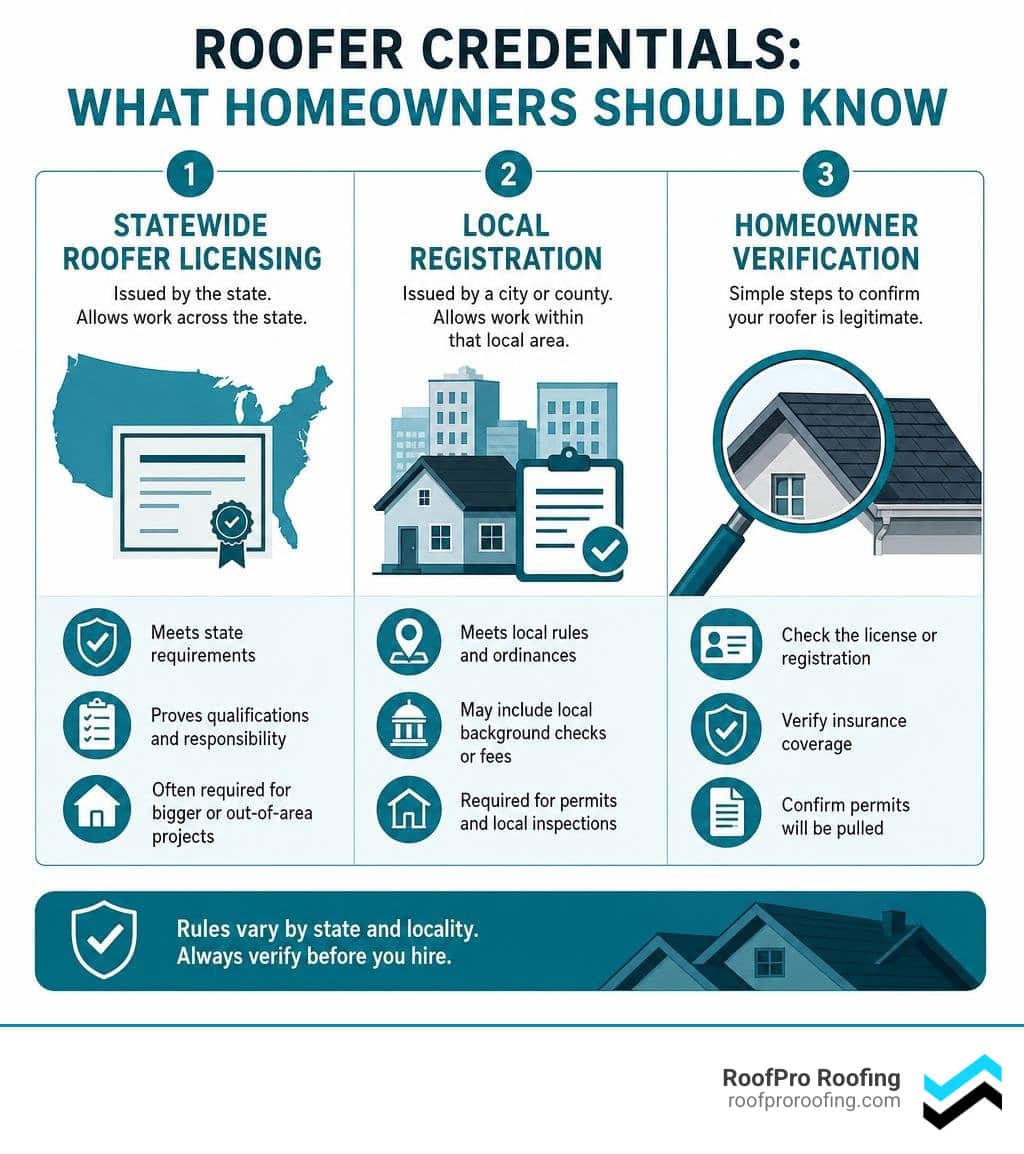
The short answer is no. Across the United States, roofing contractor licensing requirements vary by state and municipality. Some states require a roofing-specific license, while others regulate roofing through general contractor licenses, local registrations, or building permits.
States such as Florida, California, and Arizona have roofing contractor classifications. Other states may require a general contractor license or registration, depending on the project. In Texas, roofing contractors are not required to hold a statewide roofing license, although local permitting and registration requirements may apply.
Project costs and the type of roofing work can also determine whether licensing is required. For example, California generally requires a contractor license for projects costing $1,000 or more, work requiring a permit, or projects using additional workers.
Homeowners should verify requirements through official licensing agencies, including the Florida Department of Business and Professional Regulation (DBPR) and the California Contractors State License Board (CSLB).
| Regulatory Structure | Example States | Typical Requirements |
|---|---|---|
| Roofing specialty license | Florida, California, Arizona | Trade-specific licensing, examinations, and applicable insurance or bonding requirements |
| General contractor licensing | Varies by state | General or residential contractor credentials, depending on project scope |
| Local registration or permitting | Texas and other states | Municipal registration, building permits, and compliance with applicable building codes |
Why Do Roofers Have to Be Licensed in Regulated States Like Florida and California?
In highly regulated states, licensing laws exist to protect homeowners against poor structural work, financial scams, and severe storm damage. In Florida, roofing is regulated by the Construction Industry Licensing Board (CILB) under the Department of Business & Professional Regulation (DBPR).
Florida maintains two distinct licensing tiers:
- Certified Roofing Contractor (CRC): This license allows a roofing contractor to pull permits and perform residential or commercial roofing work in any county or city across Florida. Earning a CRC requires passing state trade and business law exams, proving at least four years of trade experience, demonstrating financial stability, and maintaining active liability and workers’ compensation coverage.
- Registered Roofing Contractor (RRC): This license is tied to a specific municipality or county where the contractor passed a local competency exam. The roofer can only operate within that designated local jurisdiction.
Local building officials enforce applicable roofing codes and contractor requirements. Homeowners working with our Santa Rosa roofing specialists can review local requirements through Santa Rosa County Contractor Licensing and verify a contractor’s state license through the Florida Department of Business and Professional Regulation (DBPR).
In California, the Contractors State License Board (CSLB) regulates roofing contractors through the C-39 Roofing Contractor classification. A contractor license is generally required for projects costing $1,000 or more, work requiring a building permit, or projects using additional workers. Applicants must meet experience and examination requirements and maintain a $25,000 contractor license bond. Homeowners can review the CSLB licensing requirements.
In States Without State Mandates, Do Roofers Have to Be Licensed Locally?
In states without state-mandated licenses, local rules fill the gap. In Texas, for example, the Texas Department of Licensing and Regulation (TDLR) does not license roofers. Technically, anyone can start a roofing business overnight. However, major cities enforce strict registration rules:
- San Antonio: Requires a Home Improvement Contractor registration, a $150 fee, proof of liability insurance ($300,000/$600,000 limits), and an FBI criminal background check.
- Austin: Requires contractors to register through the city’s Build + Connect portal and provide insurance before pulling permits.
- Dallas & Fort Worth: Enforce annual registration fees and permit bonds for residential building contractors.
To bridge the statewide consumer trust gap in Texas, the Roofing Contractors Association of Texas (RCAT) offers a voluntary licensing program. Candidates must prove two continuous years of business operation in Texas, pass open-book technical and safety exams with a score of 70% or higher, provide proof of workers’ compensation or a state opt-out waiver (DWC Form-005), carry $300,000 general liability insurance ($500,000 for commercial), and complete eight continuing education units annually.
In states like Minnesota, the business holds the license while an individual acts as the qualifying person. Prospective roofers can explore testing standards by reviewing the Contractor, roofer and remodeler exams | Minnesota Department of Labor and Industry and official Roofer license | Minnesota Department of Labor and Industry guidelines.
Mandatory Insurance, Bonding, and Building Code Compliance
A license is only one piece of the consumer protection puzzle. A professional roofer must also carry adequate insurance coverage, post surety bonds where mandated, and strictly follow current building codes.

General Liability and Workers’ Compensation Thresholds
Never hire a roofing contractor who cannot provide a Certificate of Insurance (COI) directly from their insurance agency:
- General Liability Insurance: Protects your home from accidental property damage. If a sudden rainstorm floods your attic while the roof is open, this policy covers the interior repairs. Typical policies range from $300,000 to $1,000,000 per occurrence.
- Workers’ Compensation Insurance: Covers medical expenses and lost wages if a worker is injured on your property. In states like Florida, all construction businesses with one or more employees must carry workers’ compensation. If you hire an uninsured contractor and a crew member falls, you could be sued for medical damages. If you are comparing local options after severe weather, learn how to find reliable roof repair without exposing your household to unexpected financial liabilities.
Impact on Building Codes and Manufacturer Warranties
Roofing codes help protect homes against severe weather. Contractors must follow the building codes and installation requirements applicable to each property.
- International Residential Code (IRC): Establishes residential roofing requirements, including roof coverings, flashing, underlayment, and structural protection.
- Florida Building Code: The 8th Edition (2023), including applicable supplements, establishes requirements for roof installation, wind resistance, and repairs. Homeowners can review official resources through the Florida Building Code website.
- Impact-Resistant Roofing Materials: Qualifying impact-resistant roofing systems may help homeowners obtain insurance discounts, depending on the insurer, policy, and state requirements.
Unlicensed or improperly permitted roofing work can create code violations, insurance complications, and warranty disputes. Homeowners should confirm that their contractor follows local requirements and manufacturer installation instructions. For additional guidance, read our Guide to Insurance Claims Assistance.
The Hidden Dangers of Hiring an Unlicensed Roofer

Hiring an unlicensed roofer might save a few hundred dollars up front, but it exposes you to serious financial and legal risks.
Financial Liability and Homeowner Insurance Rejections
If an unlicensed contractor damages your roof deck, installs defective flashing, or leaves your home exposed to severe rain, you may face expensive repairs and insurance complications. Coverage depends on your policy, the cause of damage, and the circumstances of the roofing work. Unlicensed or improperly performed installations may complicate claims, but coverage denial is not automatic.
If structural leaks damage your home, you will need professional residential repair services to correct the improper installation out of pocket. For commercial building owners, hiring unverified contractors for commercial repair can lead to business interruption, tenant disputes, and complete loss of insurance coverage for roof-related water intrusion.
Voided Material Warranties and Permitting Violations
When a roofer replaces a roof without pulling a permit from the local building department, the consequences can follow you for years:
- Stop-Work Orders and Fines: Building inspectors can halt the job and fine you if unpermitted construction is discovered.
- Failed Real Estate Inspections: When selling your home, municipal title searches will reveal unpermitted roofing work. Buyers may demand a complete, permitted reroof at your expense before closing.
- Warranty Problems: Improper installation, unpermitted work, or failure to follow manufacturer requirements may limit warranty coverage, depending on the warranty terms.
When you need a complete residential replacement or a large-scale commercial replacement, working with a properly licensed contractor helps ensure compliance with applicable building codes and manufacturer installation requirements.
How Homeowners Can Verify a Roofer’s Credentials
Protecting your home requires a few simple verification steps before signing any agreement.

Step-by-Step License and Insurance Verification
- Ask for the License Number: A legitimate contractor proudly displays their license number on business cards, estimates, contracts, and company vehicles.
- Search the State Database:
- In Florida, visit the DBPR license search portal to confirm the license is Current/Active with zero unresolved disciplinary suspensions.
- In California, run the license number through the CSLB database.
- In Texas and other local-registration states, call your city building department to ensure the contractor is registered to pull permits.
- Request Insurance Certificates Directly: Do not just accept a paper photocopy from the salesperson. Call the insurance agency listed on the COI to verify that the general liability and workers’ compensation policies are active.
- Research Regional Trade Credentials: If you are evaluating local contractors in Northwest Florida, explore what credentials to look for in coastal wind zones. For official license verification, use the Florida DBPR License Verification Portal.
Essential Questions to Ask Before Signing a Contract
Before signing a roofing contract, ask the contractor these key questions:
- Will you pull a municipal building permit in your company’s name before work begins? (Never pull an owner-builder permit for a contractor.)
- Are your installation crews covered under an active workers’ compensation policy?
- Do you offer manufacturer-backed enhanced warranties, such as GAF System Plus or Golden Pledge?
- Are your installations certified to Fortified Roof standards to maximize insurance discounts?
- Will you provide a signed lien waiver upon final payment to ensure material suppliers have been paid?
Frequently Asked Questions About Roofing Licenses
What happens if I hire an unlicensed roofer to replace my roof?
Hiring an unlicensed roofer can expose homeowners to financial liability, property damage, permitting violations, and insurance complications. If the contractor lacks proper insurance, injuries or damage may create additional expenses. Improper roofing work may also affect manufacturer warranties and lead to fines or required corrections.
How do I verify whether my roofing contractor has active insurance?
Ask the contractor for an official Certificate of Insurance (COI) that names you as a certificate holder. Call the insurance agent or carrier listed on the document to confirm policy dates, general liability limits (minimum $300,000–$1,000,000), and active workers’ compensation coverage.
Can a handyman or general remodeler legally replace a roof?
In states such as Florida and California, major roof replacements generally require an appropriately licensed contractor. Florida regulates roofing through Certified and Registered Roofing Contractor licenses, while California uses the C-39 Roofing Contractor classification. California generally requires licensing for projects costing $1,000 or more, work requiring a permit, or projects using additional workers. Requirements and exemptions vary by state.
Protect Your Investment with Certified Roofing Excellence
Your roof is the most important structural barrier protecting your home, family, and belongings from severe weather. While licensing regulations vary across the country, proper credentials, active insurance coverage, municipal permits, and manufacturer certifications are essential for any successful roof installation.
At RoofPro Roofing, we hold full state licensure, maintain comprehensive liability and workers’ compensation insurance, and specialize in high-wind shingle, metal, and tile systems. As a Fortified Roof installer and GAF-Certified contractor, we back our installations with lifetime workmanship guarantees designed to withstand the toughest coastal storms.
When you need dependable, code-compliant craftsmanship, explore our complete lineup of certified roofing services to schedule an inspection and secure your property today.