How to Choose the Right Professional Roofing Contractor
Selecting the right partner to safeguard your home is one of the most significant property investment decisions you will make. A roof is your first line of defense against severe weather, torrential downpours, and intense sun exposure. Knowing how to find reliable roof repair begins with understanding that a credible contractor operates with full transparency, proven credentials, and clear written scopes of work.
When you begin vetting professionals, avoid basing your choice solely on the lowest bid. In roofing, cut-rate pricing frequently correlates with cut corners, subpar underlayment, or uninsured laborers. Instead, request comprehensive written estimates that itemize every stage of the project—from tear-off and decking inspection to ice and water shield installation, ridge venting, and thorough site cleanup. For broader guidance on evaluating building professionals, the National Association of Home Builders offers consumer resources on hiring and remodeling best practices.
Key Credentials Every Professional Roofing Contractor Must Have
Before signing an agreement or permitting any work on your property, confirm the contractor possesses these non-negotiable qualifications:
- State Licensing: In Florida, roofing contractors must hold an active, certified license issued by the Department of Business and Professional Regulation (DBPR). This ensures they have passed rigorous trade examinations and met statutory financial and background standards.
- Comprehensive Insurance Coverage: Never rely on verbal assurances. Ask for a direct Certificate of Insurance (COI) demonstrating both general liability (to cover potential property damage) and workers’ compensation coverage (to protect you from liability should a crew member sustain an injury on your premises).
- Manufacturer Certifications: Top-tier designations, such as GAF-Certified status or manufacturer Master Elite ratings, demonstrate that the installation team undergoes ongoing training. It also enables the contractor to offer extended manufacturer warranties that uncertified roofers cannot provide.
- Fortified Roofing Standards: Specialized credentials like the IBHS Fortified Roof designation verify that the company knows how to install high-wind mitigation systems designed to withstand hurricane-force conditions.
Why Hire a Local Professional Roofing Contractor Over a National Chain
While large national chains often market heavily, choosing an established local team provides measurable advantages. Florida’s microclimates—ranging from coastal salt-air exposure in places like Destin, Santa Rosa Beach, and Pensacola Beach to high-humidity zones in Fort Lauderdale, Boca Raton, and West Palm Beach—require precise material selection and strict adherence to the Florida Building Code’s High-Velocity Hurricane Zone (HVHZ) requirements.
Local contractors maintain longstanding relationships with area building departments, streamlining the permitting and inspection process. Furthermore, when severe tropical systems hit, a local team remains anchored in the community to honor workmanship warranties long after out-of-state storm chasers pack up and leave.
Red Flags and Warning Signs to Avoid
Protect your home and budget by watching for these common contractor red flags:
- Demanding full payment upfront or cash-only transactions: A reputable contractor typically works with standard progress draws tied to material delivery and project milestones.
- Unsolicited door-to-door high-pressure sales: Be cautious of door-to-door solicitors claiming they noticed “unseen damage” immediately following a storm.
- Vague, one-page estimates: Quotes that omit specific material brands, shingle weights, ventilation details, and cleanup protocols leave room for unexpected price hikes.
- Hesitation to provide insurance certificates: If a roofer cannot produce proof of active general liability and workers’ compensation within 24 hours, move on.
- Unwillingness to pull permits: Any contractor who asks you to pull an owner-builder permit is likely unlicensed or attempting to evade municipal scrutiny.
Roof Repair vs. Full Replacement: Making the Right Decision
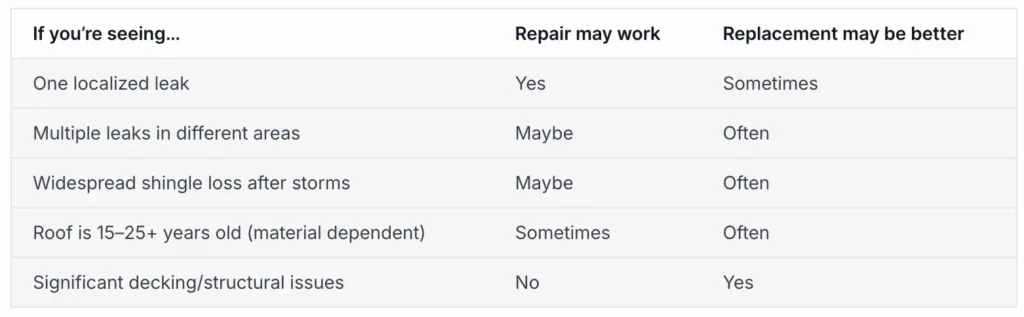
Homeowners often struggle to determine whether a compromised roof requires targeted maintenance or an entire tear-off. Making the correct choice between repair vs replacement in Florida depends on the age of the roofing system, the geographic extent of the damage, and the structural integrity of the underlying decking.

Identifying Signs of Severe Roof Damage
Catching roofing issues early prevents secondary water damage, framing rot, and mold growth. Homeowners should schedule an evaluation if they observe:
- Missing, curled, or cracked shingles: Wind gusts can break adhesive seals, allowing water to penetrate beneath the underlayment.
- Excessive granule accumulation: Finding heavy piles of asphalt granules inside gutters or near downspouts indicates advanced shingle degradation from UV rays.
- Interior ceiling stains or attic dampness: Yellowing water rings on drywall or damp insulation after heavy rain indicate an active leak path that demands immediate residential repair to avoid ceiling collapse.
- Damaged roof penetrations: Cracked rubber pipe boots, rusted chimney flashing, or loose valley flashing are the most common entry points for moisture.
Comparing Material Lifespans, Energy Efficiency, and Costs
Selecting the right roofing system involves balancing upfront budget, aesthetic preference, and coastal weather performance. Explore your available residential replacement options below:
| Roofing Material | Expected Lifespan | Wind Resistance | Energy Efficiency & Solar Reflectance | Typical Maintenance Needs |
|---|---|---|---|---|
| Architectural Asphalt Shingles | 18 – 25 Years | Up to 110–130 mph | Moderate; cool-roof granule options reflect UV rays | Low; periodic inspection after severe storms |
| Standing Seam Metal Roofing | 40 – 70 Years | Up to 140–160+ mph | Exceptional; highly reflective finishes lower cooling costs | Very Low; check fasteners and sealants every 5 years |
| Concrete & Clay Tile | 50+ Years | Up to 130–150 mph | High; natural thermal barrier and under-tile airflow | Moderate; check for cracked tiles and monitor underlayment |
Navigating the Roofing Process: Inspection to Completion
Understanding each phase of a roofing project eliminates uncertainty and ensures your home stays protected throughout installation.
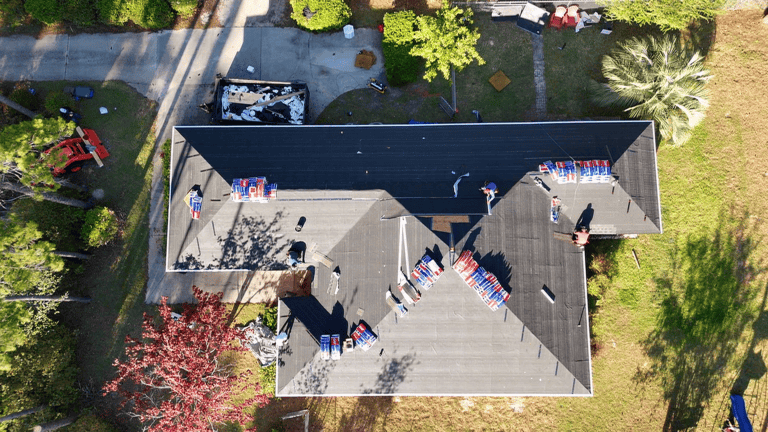
What to Expect During a Professional Roof Inspection
A thorough inspection goes far beyond a casual glance from the driveway. Modern diagnostic protocols combine high-resolution aerial drone photography with boots-on-the-roof evaluations and internal attic inspections.
During an inspection, a qualified roofer will examine:
- Surface Condition: Checking for wind uplift, shingle creasing, hail bruising, and cracked tile or metal seams.
- Attic and Decking Structure: Assessing the attic space for daylight penetration, water stains, mold, and adequate intake/exhaust ventilation balance.
- Flashing and Penetrations: Inspecting step flashing, valley metal, skylights, and plumbing vents for compromised seals.
- Moisture Diagnostics: Identifying trapped sub-surface water across flat or low-slope areas.
Following the assessment, you should receive a transparent report complete with clear photos and an honest recommendation on the best path forward.
Project Timelines, Warranties, and Insurance Claim Assistance
Most standard residential roof replacements are completed within 1 to 3 days, depending on home size, roof slope complexity, and weather conditions.
When reviewing proposals, examine the warranty structure closely. A complete warranty package includes two distinct coverages:
- Manufacturer Material Warranty: Covers product defects, typically ranging from 25 to 50 years (or Lifetime for premium systems).
- Workmanship Guarantee: Covers labor and installation integrity. Our team backs installations with a robust lifetime workmanship guarantee for lasting peace of mind.
If your roof sustained severe storm or hurricane damage, working with a contractor experienced in storm restoration documentation makes the insurance process significantly smoother. Your contractor can supply your carrier with precise measurements, photo logs, and itemized damage assessments, ensuring all necessary scope items are accounted for under your policy.
Frequently Asked Questions About Roof Services
How often should my roof be inspected and maintained?
We recommend having your roof professionally inspected at least once every year, as well as immediately following any major tropical storm or hurricane. Regular maintenance—such as clearing accumulated debris from roof valleys, keeping gutters free-flowing, and trimming overhanging tree branches—extends your system’s service life and prevents premature leak development.
What should I do immediately during an emergency roof leak?
If water begins entering your living space during a storm, focus on interior containment:
- Place large buckets or plastic containers beneath the drip.
- If water is pooling behind ceiling drywall and causing a bulge, carefully puncture the center of the bubble with a screwdriver to release the water into a bucket, preventing a wide ceiling blowout.
- Move furniture, electronics, and rugs away from the affected area.
- Never climb onto a wet or storm-damaged roof during an active rain event. Contact our emergency dispatch team to schedule immediate temporary tarping once winds subside.
What financing options are available for major roof work?
Investing in a durable, storm-resilient roof should not strain your emergency savings. Flexible financing options are available, including low-monthly-payment plans, fixed-rate loans, and short-term zero-interest promotions for qualified homeowners. Many applications provide fast pre-approvals without impacting your credit score, allowing you to secure your home without delay.
Securing Your Home with Lasting Craftsmanship
Your roof is the most vital structural barrier protecting your family, belongings, and property value. Finding the right contractor comes down to verifying Florida licensing, insisting on certified installation standards, and demanding total transparency across estimates and warranties.
Whether you need a targeted leak repair or a hurricane-ready roof replacement, our team brings decades of field-proven expertise, GAF-Certified craftsmanship, and Fortified building techniques to every project. When you are ready to protect your home with superior materials and lifetime workmanship, explore complete professional roofing services tailored to your neighborhood’s unique climate.